Technical Intelligence (TECHINT): Reading the Adversary's Hardware
Every object leaves a trace and tells a story.
Every system ever made tells a story. Every circuit board, every cable, every chip describes the meandering journey from ideation to deployment, including the plethora of decisions—good and bad—made along the way. In every war, the objects used to destroy and coerce the enemy carry information that, when analyzed carefully, can provide invaluable insight to prevent the opponent from continuing to inflict damage.
This is the premise of a somewhat unknown aspect of tech forensics, and it has its own name: technical intelligence—or TECHINT—and it is based on the simple premise that no technical object can be deployed without revealing how it was made. The maker controls their secrecy right up until the moment their creation lands in someone’s hands. After that, the object answers to whoever holds the questions and the tools.
During the First World War, both sides hauled down crashed aircraft and picked over enemy ordnance, learning what could be learned from a propeller's pitch or the chemistry of a gas shell. However, the level of discipline was still that of a souvenir hunter more than the analyst. The war that industrialized killing had not yet industrialized the study of the killing machines.
The Second World War came to change that, along with many other things it changed. The pace of new weaponry outran traditional espionage, so captured equipment became the best source available, offering a window into an adversary's engineering philosophy, creativity, manufacturing capacity and constraints. Britain's Royal Aircraft Establishment at Farnborough flew and dissected captured German and Italian aircraft; a dedicated RAF flight, nicknamed the "Rafwaffe", existed to fly enemy machines and teach Allied pilots their characteristics. In the Pacific, Technical Air Intelligence Units cut through the jungle with machetes to reach downed Japanese fighters and carried the engines out on cradles woven from tree bark. The artifacts had become sensors pointing back at the factory that built them. This is TECHINT in a nutshell: interrogating objects beyond their obvious function, in the hope of obtaining details about the system that produced the system.
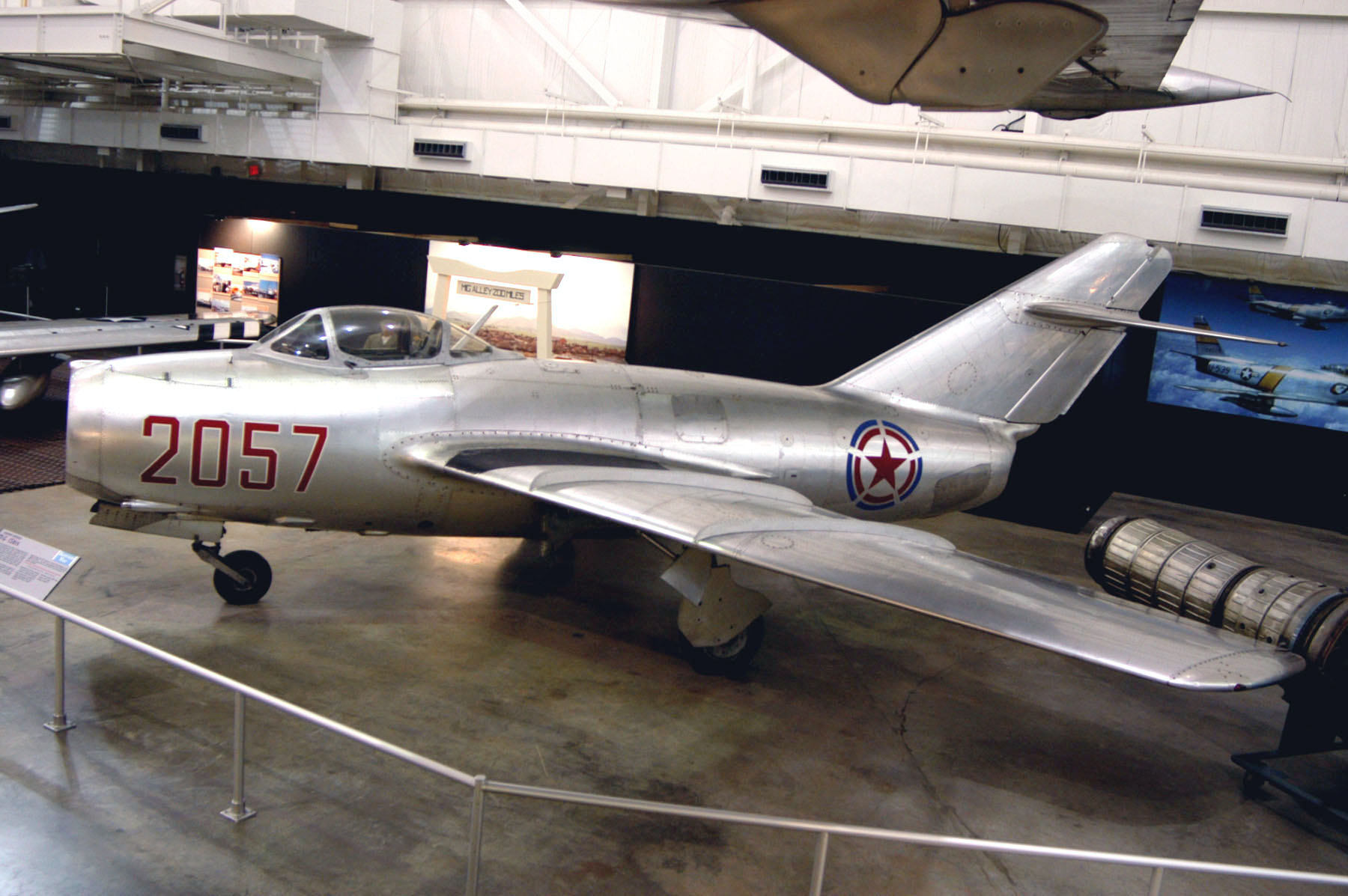
The Cold War turned TECHINT into an obsession. When one side fielded a new weapon, the other moved heaven and earth to obtain a copy, examine it, scrutinize it. The US spent months trying to obtain a Soviet MiG-15 during the Korean War, until a North Korean defector who had never heard of the operation handed them one (see cover photo). Captured missiles and their seekers were dissected to learn how to jam them. Whole institutions and directorates emerged during the time, whose purpose was foreign material exploitation. The practice of TECHINT was understood at the highest levels as a way to read an adversary's design criteria, quality control, and research philosophy directly from the hardware.
Modern TECHINT inherits all of this and evolves some of its core assumptions. The Cold War aimed for the rare, elusive, exquisite system. The fighter jet, the missile, the radar, each a tightly kept state secret. Some of today's recovered weapons are increasingly assembled from commercial parts anyone can buy, even parts from home appliances. Strike drones recovered on the battlefield show microcontrollers, navigation modules, and other microelectronics sourced from manufacturers across many countries, including counterfeits and harvested components. The performance of the system remains a relevant finding, although far from being the only one. The supply chain has become valuable intelligence. Each component, with its maker's marking and lot code, is a thread leading back through the procurement networks built to evade export controls. Needless to say, exquisite systems are still of interest for TECHINT analysts. Years ago, a fifth-generation fighter crashed in the South China Sea and a massive recovery effort was deployed to ease fears that adversaries could seize the aircraft, either to replicate the stealth technology aboard or discover ways to defeat the fighters.
Analyzing a modern weapon system requires fluency across multiple domains. Mechanical engineers can read the frames and the machining marks. Chemists can assess the propellant. The embedded specialist can decap chips to read the die, dump the firmware, and trace a part number to a distributor in a third country. The systems engineer assembles these fragments into an inference about range, accuracy, and failure modes, hopeful to find a way to make the thing break or at least erode its effectiveness. The full story emerges only when all these parts are stitched together, and stitching them is an act of generalist reasoning supported by specialist know-how.
The line connecting Farnborough to today's battlefields is there. Objects will continue leaving traces and analysts will keep collecting them and opening them. Objects will keep singing like birds about their performance, their makers, their supply lines, and the industrial context that produced it. The modern battlefield has been stormed by mass-produced hardware, each unit plethoric with attributable components with logos everybody recognizes. The opportunity requires a particular kind of engineering minds willing to tear the thing apart, observe every layer, and let the evidence tell the story.
Cover photo credit: Public domain
Subscribe to be the first in the know
We write a lot of interesting content about space engineering. By subscribing you agree to our Privacy policy.